
Spicules are microscopic, needle‑like structures made of silica or calcium and typically derived from marine or freshwater sponges. Under the microscope, they appear as sharp elements that can penetrate the stratum corneum, forming micro‑channels that enhance active ingredient delivery. They are biodegradable but not absorbed by the body in the way soluble actives are and can be incorporated in skincare products and also sometimes referred to as (bio)microneedling in a bottle. These spicules are primarily designed to increase skin penetration of other actives in the formula, not to perform medical microneedling-like collagen induction. The spicules used are not rapidly soluble and can remain embedded in the epidermis for approximately 48–72 hours, after which they are shed naturally (desquamation) with the stratum corneum. Since these micro‑needles can remain in the skin for a few days before they’re cleared, they may cause lingering irritation, particularly if they accidentally reach sensitive areas like the eyes. In a 2022 cosmetic science paper, purified freshwater sponge spicules loaded with a model flavonoid showed very high dermal absorption in ex vivo porcine (pig) skin of 73.4% of the dose in the dermis, while systemic/transdermal passage remained low, indicating that they can act as an effective local dermal delivery system, similar in concept to very superficial microneedling. However, the solid human clinical data are limited to small studies, mostly formula‑specific or manufacturer‑linked. One small Korean trial reportedly found better wrinkle/dermal density outcomes when growth factors were combined with spicules versus growth factors alone, but methodology and controls are not robust enough to be definitive. The “gimmick” part of spicules comes from mainly from marketing claims which come on top; of dramatic collagen induction, scar removal, or facelift‑like tightening, which are not backed by large, independent, long‑term human trials. Available data suggest modest improvements in texture and radiance at best, mainly by boosting penetration of real actives or mechnical exfoliation by the spicules themselves. When the formula itself is weak (without robust actives) spicules will not compensate. They should be seen as a delivery aid rather than a miracle ingredient. Spicules are cosmetic-grade in EU/Korea (INCI: "Spongilla lacustris Spicule") but lack FDA monograph approval as drugs, limiting claims. USER EXPERIENCE Spicule‑based peels and serums have been used in aesthetic practice for at least one to two decades, with traditional sponge‑powder applications going back much further, and modern K‑beauty “bio‑microneedling” formats expanding rapidly over the past 10–15 years to an estimated nine‑figure USD market, suggesting many millions of units sold worldwide. Most reported reactions are transient stinging, erythema, tightness, and short‑lived dryness, however the intensity of discomfort depends strongly on spicule length and density: longer and more densely packed spicules create more microchannels and a sharper, more aggressive feel, whereas shorter or lower‑density systems are better tolerated. Subjectively, many users describe the sensation as similar to handling fiberglass or prickly pear spines; sharp, prickly, and aggravating rather than a mild “tingle” with this perception increasing as spicule size and concentration rise. Patting rather than rubbing tends to reduce discomfort while still providing a penetration benefit, so application technique is important for tolerability. Given the current lack of robust long‑term human safety data, spicule products are generally not ideal for very sensitive, rosacea‑prone, or barrier‑impaired skin, and high‑frequency use in these groups should be approached with caution. SPICULE LENGHT Most commonly spicules measure 100–300 μm in length, determining their skin penetration depth: ▌~100 μm: Superficial penetration, targeting the stratum corneum for very gentle exfoliation and enhanced absorption, suitable for regular at-home use ▌~300 μm: Deeper but still epidermal penetration, however still less deep compared to microneedling Therefore, when you see 100 or 300 related to spicules, it’s a reference to their physical size and penetration depth, which determines their strength and function in skincare routines. This shallow range (100–300 μm) creates microchannels to enhance active absorption without reaching the dermis or causing significant trauma/downtime. Some brands like Mediheal and ClearDea use a very short spicules, which are more gentle, however also less effective as active penetration enhancers. Classic microneedling needles penetrate from about 0.25 mm (250 μm) to 2.5 mm (2500 μm), much deeper than spicules. TYPES OF MICRONEEDLE TECHNOLOGIES – COMPARISON FROM MANUFACTURER SPICULE CONCENTRATION CONFUSION VT Reedle Shot, comes in various spicule concentrations (e.g., 50, 100, 300, 700), where higher numbers mean stronger micro-needling/exfoliation effects due to higher spicule density, not necessarily larger spicule size. Users report that higher concentrations like 300 or 700 have stronger exfoliating and penetrating sensations, while lower concentrations like 50 or 100 are milder. These concentration differences affect the intensity of the delivery effect and potential skin irritation. Higher concentrations create more microchannels but may increase tingling or prickling sensations and require less frequent use. Lower concentrations are gentler and can be used more regularly and are more suitable for sensitive or irritable skin. VT describes its Cica Reedle™ spicules as “around fourteen times thinner than pores” and “smaller than pores,” without disclosing an exact micrometer size; typical facial pores are on the order of 200–300 µm in diameter, so this implies a very fine needle‑like structure. For Reedle Shot 300, VT and retailers report approximately 237,500 Cica Reedles per application, which, together with Cica Reedle’s small diameter, helps explain the pronounced “liquid microneedling” sensation and improved absorption, texture, pore visibility, and acne‑related roughness noted in marketing and user feedback. Classic Reedle Shot formulas pair Cica Reedle™ with Centella asiatica, multi‑weight hyaluronic acid, niacinamide, adenosine, propolis, and amino acids (CICA‑HYALON™ complex) for soothing, barrier support, and slow‑aging benefits. The Reti‑A Reedle Shot variants add a vitamin A complex (retinol and retinoid ester) plus bakuchiol on top of the Cica Reedle™ system, using the spicules to enhance retinoid delivery while the CICA‑HYALON™ base supports tolerability. SPICULES + EXOSOMES Medicube 1-Day Exosome Shot which is marketed as “microneedling in a bottle,” is available in 7,500 and 2,000 “microneedle” versions. ▌7,500 spicules = Total hydrolysed sponge spicules delivered in one full application of the 7,500 version (typically 30ml bottle or single-use ampoule equivalent). ▌2,000 spicules = Total in the milder 2,000 version per application. These are density/concentration markers for marketing and product differentiation. Key difference between both brands mentioned is that VT uses relative concentration (spicules/ml), while Medicube uses absolute count per treatment. Both scale intensity with higher numbers, but Medicube's 7,500 delivers far more spicules total despite similar density effects. PAINLESS SPICULES ClearDea is a brand that uses Collanetinal™ spicules of approximately 0.01 mm (11 μm) in length, i.e., very short. Because spicule length largely determines penetration depth, these collagen‑ and retinol‑coated spicules are expected to act predominantly in the very superficial layer(s) of the skin and to be gentler than longer, more prickling spicules. They are likely to be less efficient as active delivery enhancers. SPICULES + CAPSULSES In the SUNGBOON EDITOR gel‑cream, (tiny whitish) spicules are combined with separate capsules containing very low molecular weight (200 Da) collagen‑related ingredients, retinol, niacinamide, hyaluronic acid and panthenol in a gel-base. Spicules are designed to boost the bioavailability of the encapsulated actives by nudging them closer to the viable epidermis and superficial dermis, which may enhance visible results compared with a conventional cream of similar composition. The magnitude of this benefit, however, is tightly linked to spicule size (not disclosed for this product) and density. The formula contains 300.000 shots, which is a marketing way of saying that one jar contains approximately 300,000 individual spicules. The prickly, tingling feel from the spicules is frequently mentioned in reviews; some users enjoy it as a sign that the product is “doing something,” while others find it uncomfortable or briefly stinging. SUNGBOON recommends specifically for dry skin 2 part capsuls and 1 part gel, for oily skin 2 parts gel and 1 part capsule and for combination skin 1 part capsule and 1 part gel ratio. The concentration of active ingredients: ▌200 Da collagen: 1,100,000 ppb, which literally means 1,100,000 parts of a substance in 1,000,000,000 parts of the total mixture. In percentage terms, that is 0.11%. ▌Niacinamide: 20,000,000 ÷ 1,000,000,000 = 0.02, which corresponds to 2%. ▌Retinol: 3000 ppb is 0.0003%. Retinol at just 0.0003% (3 ppm) barely penetrates skin: less than 1% gets through without help. Spicules' microchannels boost this 10x or more, making tiny doses far more effective. If SUNGBOON´S before‑and‑after photos truly reflect typical results, this product would be worth serious consideration. However, when used consistently and with appropriate skin tolerance, SUNGBOON EDITOR Deep Collagen Retinol can realistically be expected to modestly improve skin smoothness, hydration and fine lines rather than produce dramatic “filler‑like” changes. Some users experience more bouncy or firmer skin and even skin tone. 2 STEP – SPICULE AMPOULE + MASK Mediheal’s Spicule Pore Tightening System is a multi‑step, home‑use “bio‑microneedling” kit designed to target enlarged pores and uneven texture. It combines a highly purified spicule ampoule (advertised as 99.9% purified spicules) with an occlusive sheet mask to enhance penetration (speed, depth and rate) around follicular openings and remodel the peri‑pore skin structure, resulting in visibly fewer, shallower‑appearing pores and smoother skin over roughly 1–2 weeks of use. System 1 functions as the intensive pore‑refining phase, while the subsequent mask step focuses on hydration and calming after the stimulatory spicule exposure. The kit is marketed as an at‑home alternative to peels or microneedling for sebaceous, coarse‑pored skin, but it should be used cautiously in highly sensitive or rosacea‑prone patients because of expected transient stinging, erythema (redness), and the scarcity of independent long‑term safety data. The system contains very small micro‑spicules, reported at approximately 20–30 µm in length and described as “smaller than a pore,” with different versions differing mainly in concentration (around 1,000–3,000 ppm) rather than size. Mediheal refers to these as “collagen spicules,” and the formulations contain multiple collagen forms (such as hydrolyzed collagen, atelocollagen, and procollagen). As a result, the product both supplies collagen as an ingredient and presents the spicules as collagen‑associated carriers intended to support pore‑area firming and textural refinement. Similar, however not the same is the VT Reedle Shot 2‑step masks, which are bio‑microneedling sheet masks that combine a spicule “essence” with an occlusive mask to intensify penetration and skin benefits. In step 1, a concentrated ampoule containing natural micro‑spicules (Cica Reedle™ based on silica and Centella) is massaged onto cleansed skin, creating temporary microchannels and a characteristic tingling or prickling sensation while priming the surface. Step 2 is a serum‑soaked sheet mask placed over this prepped skin for 15–30 minutes; it is typically loaded with humectants and barrier‑supporting actives such as hyaluronic acid, hydrolyzed collagen, peptides, niacinamide, centella, propolis, and amino acids, aiming to hydrate, improve elasticity, refine texture, and calm irritation. Different versions (e.g., Mild 50, 100, 300) reflect increasing spicule density and intensity: lower numbers are gentler and better suited to sensitive or first‑time users, while higher numbers are positioned for concerns like rough texture, post‑acne marks, dullness, and fine lines, used no more than 1–2 times per week. BRIGHTENING + GLOW Genabelle has built a small spicule portfolio around “shot” ampoules that combine brightening or glow complexes with a micro‑stimulation delivery system. Melacare Spicule Toning Shot Ampoule ▌In their words, the product contains high-potency ingredients and microstimulating spicules to enhance absorption and efficacy. Specifically designed to target and reduce dark spots, uneven pigmentation, and blemishes, it delivers visible improvement for a clearer, more even complexion. ▌Uses 2,000 ppm high‑purity purified spicules (hydrolyzed sponge) to create micro‑stimulation and microchannels, enhancing penetration of the actives. ▌Contains Melacare Complex (≈80,000 ppm), a proprietary brightening blend centered on niacinamide and tranexamic acid, aimed at reducing freckles, blemishes, and general dyschromia. ▌Human application testing (“quadruple human application test”) is reported, with improvements in freckles, blemishes, and overall clarity/brightness. Glutathione Vita Glow Spicule Shot ▌Focuses on radiance and tone uniformity, pairing 2,000 ppm glutathione with vitamin C derivatives in a spicule delivery base. ▌The spicule system provides a “microneedling effect” with tingling/micro‑stimulation while driving antioxidants deeper to enhance glow and transparency. ▌Clinical testing is claimed for improvements in brightness and overall skin tone. Across these products, Genabelle positions spicules as an at‑home, low‑downtime alternative to procedural microneedling, designed mainly to boost delivery of brightening/antioxidant complexes while also addressing texture and early signs of aging, with suitability claims extending even to drier or more sensitive skin types but still with expected tingling on use. SPICULES + PEPTIDES Several brands deliberately pair peptides-molecules that typically show poor passive skin penetration with spicule‑based ‘bio‑microneedling’ systems, leveraging the micro‑channels created by spicules to substantially enhance peptide delivery into deeper epidermal and dermal layers, as proven by spicule‑based peptide delivery studies. In a 2021 study, sponge spicules from Haliclona sp. (SHS) were incorporated into topical formulations containing insulin (hydrophilic peptide) and cyclosporine A (hydrophobic cyclic peptide). SHS increased insulin transdermal flux from 5.0 ± 2.2 ng/cm²/h (passive) to 457.0 ± 32.3 ng/cm²/h (about 90‑fold) and raised its deposition in deeper skin layers from 0.6% to roughly 55%. This enhancement was both spicule‑dose‑dependent and peptide‑dose‑dependent, supporting a true mechanistic effect of the spicules on peptide penetration. DR.PEPTI Peptide Spicule Pore Solution Serum contains Hydrolyzed Sponge (3,000 ppm) as the spicule source plus an extensive peptide complex: acetyl hexapeptide‑8, acetyl octapeptide‑3, multiple tetra‑, tri‑, and dipeptides, copper tripeptide‑1, palmitoyl peptides, etc., alongside retinol, exosomes, bakuchiol, glutathione, tranexamic acid and sodium DNA. It is positioned for pore care, elasticity and anti‑aging, using spicules to drive the peptide blend deeper. TONYMOLY Peptide Spicule Firming Ampoule is described as an elasticity ampoule with peptide + bakuchiol + collagen‑coated spicules for firming sagging skin and fine lines. Here the spicules are directly linked to both collagen and peptide‑driven firming. ALTUM™ PEPTIDE / PEPTAXEL™ programs (Skinzzo LAB) is a professional bio‑microneedling system where Raphitox™ spicules are bound to tripeptides, then released in the epidermis via glutathione; positioned as “5th‑generation spicules” specifically designed to deliver peptides for collagen stimulation. Altum™ Peptide (Raphitox‑bound tripeptides) compared a peptide‑only cream vs. spicules + peptides vs. Altum’s peptide‑spicule complex; the “spicules + peptides” combo outperforms peptides alone in improving skin density and wrinkles, supporting the delivery advantage. Spicule Serum concept formulas (CTK): OEM “Spicule Serum” bases combine spicules + a 10‑peptide complex + collagen complex + panthenol, marketed for elasticity, lifting and hydration. SPICULES + GROWTH FACTORS A study on sponge microspicule cream for bioactive proteins and growth factors supported that spicules are an effective delivery system for macromolecular actives that otherwise penetrate poorly. Several product concepts now combine spicules with growth‑factor–type actives, but the best documented growth‑factor + spicule work so far is in clinical/experimental formulations rather than big retail SKUs. MS‑EGF micro‑spicule cream (clinical study): A soluble micro‑spicule cream containing epidermal growth factor (EGF) was tested for periocular wrinkles in a split‑face, 8‑week clinical study. The micro‑spicule EGF (MS‑EGF) formulation produced significantly greater increases in dermal density and dermal depth and better clinical wrinkle improvement than EGF cream alone, with good tolerability. Nano‑encapsulated spicule system with MSC secretome: A 2025 study developed marine sponge spicules nano‑coated with Wharton’s jelly–derived mesenchymal stem cell secretome, which is rich in multiple growth factors and cytokines. Compared with secretome alone, the spicule‑based system showed higher dermal penetration, enhanced fibroblast/keratinocyte activity, faster wound closure, more collagen synthesis, and clinically significant reductions in pore number, wrinkles, and pigmentation after two weeks. Professional bio‑microneedling brands Several pro lines (e.g., SQT / Spongilla protocols, algae/spicule peels like su skin) pair spicules with “growth‑factor–enriched serums” or stem‑cell–derived actives in treatment protocols, though these are typically marketed as in‑clinic systems rather than consumer products. They emphasize that spicules “activate growth factors” and enhance diffusion of peptides, vitamins, and growth factors into the lower epidermis. SOME NOTEWORTHY LESSER KNOWN BRANDS WHICH INCORPORATED SPICULE DELIVERY SYSTEMS: ▌Pepticule pairs spicules with acetyl hexapeptide-8 for “botulinumtoxin-like”anti-wrinkle effects via deep delivery. ▌Pestlo Spicule Reborn Peeling Mask combines spicules with green tea and mugwort for brightening and even tone. ▌9wishes Pine Perfect Ampule Serum uses spicules alongside pine, licorice, and green tea extracts to target acne and renewal. ▌Isomers Diamond Peptide Spicule Body Cream blends spicules, diamond powder, alp rose stem cells, caffeine, and peptides to address body stretch marks, sagging, and texture. REPRESENTATIVE SPICULE SKINCARE PRODUCTS OVERVIEW MAIN PRODUCT FORMATS USING SPICULES VERDICT
“Do spicules work?”: yes, as a micro‑delivery technology, there is evidence that spicules enhance dermal delivery and can improve clinical skin parameters when paired with effective actives and when spicule length and density are sufficient. They likely also provide to some degree of mechanical exfoliation on application. Studies indicate that spicules can also help larger molecules, such as peptides and other macromolecules that usually penetrate the skin poorly in standard skincare, reach deeper skin layers more effectively when they are formulated together. “Are spicules a miracle?”: no; current scientific evidence is sparse, short‑term, and often industry‑linked, so they should be viewed as an adjunct delivery tool with potential, not a stand‑alone, clinically proven game‑changer. Worth a try”?: Alternative, more controlled options exist (e.g., microneedling, microstamping) that can provide similar or superior penetration or textural benefits without persistent mineral needles in the skin. Products containing “longer” spicules are potentially worth trying only for people with very resilient skin who are highly motivated and comfortable with discomfort and some uncertainty. For sensitive skin or risk-averse users, maybe the very short coated spicules are an option. Personally, I would recommend spicule‑based products only with caution at this stage, and limit use to a single product at a time whose active ingredients clearly match your main skin need r concern. The technology is exciting and promising, however more robust human safety data are needed before fully endorsing it, even though there is roughly 10–15 years of user experience without serious adverse effects reported. Daily use is not advisable. Spicules persist in the skin up to 72 hours, with no data on long-term accumulation, which could theoretically trigger granuloma formation from silica persistence as biogenic spicules may trigger foreign body reactions in long-term use, cause subclinical inflammation, or barrier impairment, changes that ultimately accelerate skin ageing. Take care! Anne-Marie REFERENCES ▌Kim TG, Lee Y, Kim MS, Lim J. A novel dermal delivery system using natural spicules for cosmetics and therapeutics. J Cosmet Dermatol. 2022 Oct;21(10):4754-4764. doi: 10.1111/jocd.14771. Epub 2022 Feb 1. PMID: 35034416. ▌Ha JM, Lim CA, Han K, Ha JC, Lee HE, Lee Y, Seo YJ, Kim CD, Lee JH, Im M. The Effect of Micro-Spicule Containing Epidermal Growth Factor on Periocular Wrinkles. Ann Dermatol. 2017 Apr;29(2):187-193. doi: 10.5021/ad.2017.29.2.187. Epub 2017 Mar 24. Erratum in: Ann Dermatol. 2017 Dec;29(6):828. PMID: 28392646; PMCID: PMC5383744. ▌Kim, H., Lee, H. J., Lee, H., Kim, S. N., & Park, E. S. (2021). Enhanced skin delivery of therapeutic peptides using sponge spicules in combination with flexible liposomes. Biomolecules & Therapeutics, 29(6), 707–716. https://doi.org/10.4062/biomolther.2021.166 ▌Lee, N.E.; Kim, J.E.; Bang, C.Y.; Bang, O.Y. Nano-Encapsulated Spicule System Enhances Delivery of Wharton’s Jelly MSC Secretome and Promotes Skin Rejuvenation: Preclinical and Clinical Evaluation. Int. J. Mol. Sci. 2025, 26, 10024. https://doi.org/10.3390/ijms262010024 ▌Udompataikul, M., Wongniraspai, M., Showpittapornchai, U., & Jariyapongsakul, A. (Year). The study on effects and safety of Spongilla lacustris in 3% hydrogen peroxide solution on rat skin. Journal Name, Volume(Issue), pages. ▌The Ultimate Guide To Spicules SkinCare: A Revolutionary Approach To Skincare https://spongespicule.com/the-ultimate-guide-to-spicule-skincare/ This post is based on my own, independently purchased products and personal research. It is intended for educational and informational purposes only, does not replace individual medical advice, and is not intended to diagnose, treat, cure, or prevent any disease. All opinions are my own; this content is not sponsored, and no affiliate links are used.
Comments
Skin ageing is a biological degenerative process, marked by loss. The number of patients seeking nonsurgical rejuvenation of the face and the body is continuing to increase due to a growing ageing population concerned with physical appearance. Women wish to maintain a youthful appearance and attractiveness represent 92% of all cosmetic procedures.(1) Men are keen to maintain physical characteristics associated with virility.(2) Millennials are also increasingly concerned with preserving their beauty and youth.(3) Among the various treatment approaches, different minimally invasive techniques have been developed and dermal fillers currently come second after botulinum toxin type A (BTA).(3) Their use is increasing worldwide.
"The fear of looking done is the number 1 reason why patients don't seek treatment"* The range of fillers available for soft-tissue augmentation is constantly expanding. The latest advances in filler technology include bio-stimulators that exert their aesthetic effect by promoting predominantly collagenesis or biological stimulation of new collagen and sometimes also elastin production. Therewith they provide a biological answer to the skin ageing degeneration process, with gradual and often very natural results. Over the course of last years the knowledge on injectable bio-stimulators has grown, and therewith their safety and popularity as they provide subtle longer lasting results. Facial fillers can be broken into 3 main groups:
Bio-stimulating fillers promote the body’s natural production of some ECM components (mostly collagen) over a period of several months. Their differences are characterized by their property of inducing natural collagen production. SYNTHETIC BIOSTIMULATORS
Calcium Hydroxylapatite Calcium hydroxylapatite: Calcium hydroxylapatite is a type of mineral that is commonly found in human teeth and bones and in injectbales the calcium hydroxylapatite particles are suspended in a gel-like solution. The effects of this material last approximately 18 months with minimal inflammatory response. Radiesse is a biodegradable filler consisting of 30% synthetic CaHA microspheres (diameter of 25-45μm) suspended in a 70% aqueous carboxymethylcellulose gel carrier. The soluble carrier gel evenly distributes the Radiesse CaHA microspheres providing 1:1 correction and gradually dissipates leaving the microspheres at the injection site where they induce collagenesis (collagen type I and mostly collagen type III) by fibroblast activation. Animal studies have shown that this new collagen growth occurs as early as four weeks post-injection and continues for at least 12 months with an average duration of effect of 12 to 18 months, though some results have been noted 24 months post-injection. Radiesse provides both immediate (replacement volume) and long-lasting (collagen biostimulation) volume enhancement. (5) Poly-L-lactic acid PLLA is a biodegradable, bioresorbable biocompatible man-made polymer. This material has wide uses in absorbable stitches and bone screws. The effects of PLLA generally become increasingly apparent over time (over a period of several weeks) and its effects may last up to 2 years. There is an inflammatory response. PLLA is an alpha hydroxy acid polymer of the lactic acid L-enantiomeric structure that has been safely used in many applications and in medicine for more than 30 years. Its use has expanded worldwide, associated with good long-term aesthetic results thanks to its biostimulatory-collagen effect. PLLA-based fillers are supplied as a lyophilized powder to be reconstituted with sterile water. The collagen stimulatory properties were evidenced in human in subjects (n=14) who received PLLA injections (3 sessions, spaced 4 weeks apart) at the postauricular level by collagen histochemical determination on biopsies taken at different times. Increase of collagen type-I was shown at 3 and 6 months. This study opened the new class of collagen stimulators. The long duration of action was demonstrated in a first pivotal study comparing PLLA versus collagen (116/117 subjects, respectively); the long-term safety/efficacy was shown up to 25 months. The rationale for several sessions was first documented in a dedicated article; this modality allows the effect through collagen stimulation, a biological process to occur and avoids overcorrection. PLLA fillers are among the most clinically documented products. (6) Polymers, polycaprolactone The PCL-based collagen stimulator is composed of PCL microspheres suspended in a carboxymethyl-cellulose gel carrier providing immediate and sustained volumizing effects when injected; the morphology, the biocompatibility of the PCL microspheres embedded with the collagen fibers produced all contribute to the creation of a unique 3D scaffold for a sustained effect. Its safety has been investigated in clinical studies and vigilance surveys. It presents the advantage of a slower degradation than polylactic acid (PLLA) or polyglycolic acid (PGA), which both belong to the same chemical family. Both the S and M products induced collagen production. In animal, the M product induced collagen type-III and type-I at early stage (measure at 9 months), and later predominantly collagen type-I, that deposits around the PCL microspheres (measure at 21 months). Many fibroblasts were found near the PCL microspheres. Interestingly, new elastin fibers were also formed, and neovascularization with new capillaries observed as well. (7) NATURAL BIOSTIMULATORS 1. Platelet rich plasma 2. Platelet rich fibrin 3. Polynucleotides like Nucleofill or Nucleadyn 4. Exosomes 5. Alginate 6. Tropoelastin (precursor of elastin molecule) 7. Poly-y-glutamic acid Platelet-Rich Plasma (PRP): PRP treatments are produced by spinning a small volume of the patient’s own blood through a centrifuge. This separates and concentrates the blood’s components, including platelet-rich plasma and the “buffy coat,” a solution that contains immune cells. The provider combines these two components with a small amount of calcium chloride (which activates and keeps the PRP stable), then injects them into the treatment area. Over a period of months, PRP stimulates the body’s natural collagen production. Platelet-Rich Fibrin (PRF): PRF is produced using a process similar to PRP concentration. The active material is a fibrin matrix rich in platelets, stem cells, and immune cells. Like PRP, PRF treatment stimulates collagen production and is also implicated in tissue regeneration, though there’s less data on the durability of its effects. Because both treatments use material from the patient’s own body, so there’s no risk of rejection or similar complications. PRF and PRP effects are durable — typically lasting longer than 18 months. Polynucleotides: Polynucleotides are most often natural, highly purified DNA molecules extracted for example from trout gonads and activate specialised cells called myofibroblasts and adipocytes. PN containing devices act as short time temporary fillers thanks to the viscoelasticity of the long DNA fragments and improve skin well‐being (cell growth) and steady self‐repair (tissue regeneration). Read more Exosomes: The use of exosomes at the Aesthetic & Anti-Aging Medicine World Congress in Monaco was discussed during many session and some excellent results were presented. However their use is not yet approved and safety and long-term effect not yet established and largely depends on the source. Read more BOTULINUM TOXIN There is evidence that the neuromodulator or musclerelaxer Botinumtoxin after injection upregulated the expression of type I collagen, decreases the production of some MMPs in fibroblasts, preventing collagen degradation and improves collagen organisation. (8.9.) ENERGY BASED DEVICES Intense Pulsed Light/BroadBand Light, Radiofrequency Microneedling, lasers, High-Frequency Ultrasound, Electromagnetic Tec. stimulate collagen production via a controlled damage and repair mechanism. DERMO-COSMETICS WITH BIO-ACTIVES There are innovative dermo-cosmetic products containing bio-stimulating ingredients, working more superficial in comparison to in-office treatments and they therefor are potentially an excellent choice as adjunctive care for biological rejuvenation and revitalization for younger looking and acting skin. They are safe to use easy to apply over face, neck and décolletage. Unlike in-office treatments their effects are temporary (fully reversible as regulated), hence they require daily or twice daily application. Biostimulating active ingredients in skincare which have shown to particularly stimulate the fibroblast are for example:
VITAMIN C IS NEEDED FOR COLLAGEN SYNTHESES! Our skin needs Vitamin C to produce collagen and is not able to produce it, thus relies on external resources for supply. Therefore I highly recommend to either get enough Vitamin C from your diet or use a high quality topical product pre & post biostimulators. Read more BIOSTIMULATION FAT CELLS Renuva is an allograft adipose matrix injectable that offers a non-surgical solution for volume restoration in various areas of the body, including the face, hands, and areas with contour irregularities. It stimulates the growth of own fat cells, potentially providing longer-lasting results. Renuva is FDA-regulated. In skincare the ingredient Magnolol or Magnolia Bark Extract has shown to increase the number and size of adipocites or fat cells to counteract volume-loss. As the biological degeneration takes place in different layers of the skin and it's underlying structures, combining in-office treatments specifically targeting those layers in a series of treatments may provide longer lasting results and give higher patient satisfaction.(13) Safety and outcome rely on the qualification and experience of your cosmetic doctor, dermatologist or plastic surgeon. Take care Special thanks MD FAAD Hassan Galadari Jair Mauricio Cerón Bohórquez M.D. References: 1. American Society Plastic Surgeons. 2020 national plastic surgery statistics; 2020. 2. Wat H, Wu DC, Goldman MP. Noninvasive body contouring: a male perspective. Dermatol Clin. 2018;36(1):49–55. 3. Wang JV, Akintilo L, Geronemus RG. Growth of cosmetic procedures in millennials: a 4.5-year clinical review. J Cosmet Dermatol. 2020;19(12):3210–3212. 4. Evaluation of the biostimulatory effects and the level of neocollagenesis of dermal fillers: a review. Haddad S, Galadari H, Patil A, Goldust M, Al Salam S, Guida S International Journal of Dermatology, 29 Apr 2022 5. J Clin Aesthet Dermatol. 2015 Jan; 8(1): 38–49. Calcium Hydroxylapatite Over a Decade of Clinical Experience Jani Van Loghem, MD, Yana Alexandrovna Yutskovskaya, MD,b and WM. Philip Werschler, MDc 6. Clin Cosmet Investig Dermatol. 2022; 15: 997–1019. Collagen Stimulators in Body Applications: A Review Focused on Poly-L-Lactic Acid (PLLA) Marie-Odile Christen Read more 7. Clin Cosmet Investig Dermatol. 2020; 13: 31–48. Polycaprolactone: How a Well-Known and Futuristic Polymer Has Become an Innovative Collagen-Stimulator in Esthetics Marie-Odile Christen and Franco Vercesi 8. Oh SH, Lee Y, Seo YJ, Lee JH, Yang JD, Chung HY, Cho BC. The potential effect of botulinum toxin type A on human dermal fibroblasts: an in vitro study. Dermatol Surg. 2012 Oct;38(10):1689-94. 9. El-Domyati M, Attia SK, El-Sawy AE, Moftah NH, Nasif GA, Medhat W, Marwan B. The use of Botulinum toxin-a injection for facial wrinkles: a histological and immunohistochemical evaluation. J Cosmet Dermatol. 2015 Jun;14(2):140-4 10 EADV 2022 Inhibition of extracellular matrix degrading enzymes and bio-stimulation of fibroblasts – A novel approach to mitigate the advanced degenerative process in skin aging Weise J, Vogelsang A, Sperling G, Welge V, Nölter A, Mielke H, Knott A, Harbig S, Stuhr A, Dunckel J, Warnke K, Geloven van A 11. EADV 2021 Multifaceted novel approach to increase skin’s own epidermal and dermal hyaluron content Bussmann T, Warnke K, Krüger A, Möller N, Harbig S, Stuhr A, Dunckel J, Geloven van A, Weise J | Beiersdorf AG, Hamburg, Germany 12. Photochemistry and Photobiology, 2005, 81: 581–587 Novel Aspects of Intrinsic and Extrinsic Aging of Human Skin: Beneficial Effects of Soy Extract Kirstin M. Su¨del et al 13. Combination Therapy in Midfacial Rejuvenation Humphrey et al. Dermatologic Surgery 42:p S83-S88, May 2016. *AMWC 2023 Tapan Patel
It is widely known that skin´s own hyaluron is a precious molecule keeping our skin hydrated as it is a powerful humectant (attracting and binding water), hence giving the skin a natural plumpness and bounce. What many don´t know is that skin´s own hyaluronic acid content needs to be replenished continuously, as it´s half-life is only several hours up to one day 1. It´s degradation is fastened by 2 different pathways: an external influence via free radical activity or physical degradation and an internal pathway via enzymatic or biological degradation by a family of enzymes called hyaluronidase or abbreviated HYAL.
There are 6 different ones identified and HYAL 1 is the most active one. HYAL 1 “cuts” large size hyaluron molecules (the most capable of binding water) into smaller molecules, which are eliminated even faster. One of the strategies to maintain skin´s own hyaluron content is to inhibit the HYAL enzymes, especially HYAL1. Comparing photo-exposed skin to photoprotected skin showed significant increase in the expression of L-HA (low molecular weight HA) which are smaller or broken hyaluronic acid molecules. An increase of degradated hyaluron was associated with a significant expression of HYAL-1 (2)..UV, ROS or free radical activity leads to the activation of hyaluronidase (3,4). You may now wonder how it is possible that hyaluron filler injections can have a lasting effect of several months or even longer than a year. This is because in those injectable gels the hyaluron molecules are stabilized to protect them from the impact of free radicals and HYAL enzymes. Often this is done with chemical crosslinks (BDDE). Manufacturers of those hyaluron injectable gels use different stabilizing or crosslink technologies and different number of crosslinks, which impacts the gels consistency and longevity. They aren´t completely resistant to hyaluronidase, as it can be used to dissolve injected hyaluron. As hyaluron is anyway depleted and replenished every day, this dissolving procedure hardly affects skin´s own hyaluronic acid content. This is a common misconception.
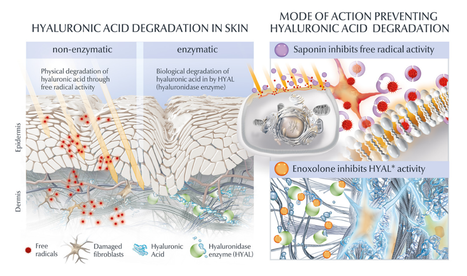
In skin care however, the use of crosslinked hyaluron (hence lasting for months or longer) does not make a lot of sense as we usually cleanse our skin twice daily and thus wash it away. It is too large to penetrate. There are some benefits for crosslinked hyaluron, but it does not impact the longevity of skin´s own hyaluronic acid content. One ingredient derived from the roots of Chinese Licorice plant called Enoxolone (also known as Glycyrrhetinic acid) however, has proven to decrease the HYAL1 activity by 54% (in vitro) (5.6). This is a novel and safe topical way to protect skin´s own hyaluronic acid content from fast degradation and elimination.
However, as mentioned before free radicals increase HYAL1 activity and as we age our skin becomes less resilient against accumulated oxidative stress. Therefore, the most optimal approach to inhibit increasing break down of hyaluronic acid is to combine HYAL1 inhibition with powerful anti-oxidants. In the illustration, which I created professionally, it is Saponin. Saponin is next to a powerful anti-oxidant, also a potent bio-stimulator of the fibroblast for hyaluron (+256%), collagen (+49%) (6) and elastin (+19%). Furthermore, Enoxolone stimulates melanin production, supports the skin's own repair mechanism against UV-induced DNA damage and inhibits enzymatic elastin degradation. What a power-couple to have in dermo-cosmetic products to manage the biological degenerative process of ageing skin. Take care 1. HA: a key molecule in skin aging E. Papakonstantinou 2. Dermatoendocrinol. 2012 Jul 1; 4(3): 253–258. doi: 10.4161/derm.21923 Hyaluronic acid: A key molecule in skin aging Eleni Papakonstantinou, 1 Michael Roth, 2 and George Karakiulakis 1 3. BMC Complementary and Alternative Medicine December 2013, 13:304| In vitro determination of the anti-aging potential of four southern African medicinal plants Authors Gugulethu NdlovuEmail, Gerda Fouche, Malefa Tselanyane, Werner Cordier, Vanessa Steenkamp 4. Bioorg Chem. 2018 Apr;77:159-167. doi: 10.1016/j.bioorg.2017.12.030. Epub 2018 Jan 4. In-vitro evaluation of antioxidant, anti-elastase, anti-collagenase, anti-hyaluronidase activities of safranal and determination of its sun protection factor in skin photoaging. Madan K1, Nanda S2. 5. EADV Poster 2021 A holistic hyaluron-centric anti-aging concept to improve static and dynamic wrinkles Geloven van A, Harbig S, Stuhr A, Dunckel J, Kuhn A, Dippe R, Warnke K, Beiersdorf AG, Hamburg, Germany 6. EADV Poster 2021 Multifaceted novel approach to increase skin’s own epidermal & dermal hyaluron content Bussmann T, Warnke K, Krüger A, Möller N, Harbig S, Stuhr A, Dunckel J, Geloven van A, Weise J, Beiersdorf AG, Hamburg, Germany 7. Hong et al. Glycyrrhetinic Acid: A Novel Modulator of Human Skin Pigmentation and DNA-Repair September 2009Journal of Investigative Dermatology Conference: 39th Annual European-Society-for-Dermatological-Research Volume: 129 |
CategoriesAll Acne Age Clocks Ageing Aquatic Wrinkles Armpits Autophagy Biostimulators Blue Light & HEVIS Circadian Rhythms Cleansing Collagen CoQ10 Cosmetic Intolerance Syndrome Couperose Deodorant Dermaplaning Diabetes DNA Damage DNA Repair Dry Skin Epigenetics Epigenome Evidence Based Skin Care Exfoliation Exosomes Exposome Eyes Face Or Feet? Facial Blushing Facial Flushing Facial Oils Ferroptosis Fibroblast Fingertip Units Gendered Ageism Genome Glycation Growth Factors Gua Sha Hair Hair Removal Hallmark Of Aging Healthy Skin Heat Shock Proteins Hormesis Humidity Hyaluron Hyaluronidase Hyperpigmentation Hypo-allergenic Idiopathic Gutatte Hypomelanosis (IGH) Indulging Inflammasome Interactome Jade Roller Keratinocytes Licochalcone A Lipid Peroxidation Luxury Skin Care Lymphatic Vessel Ageing Malar Oedema Matrikines Melasma Menopause Microbiome Milky Toners Mitochondrial Dysfunction Mood Boosting Skin Care Neurocosmetics Oily Skin Ox Inflammageing Peptides PH Balance Skin Photo Biomodulation Pigmentary Aging Polynucleotides Post-inflammatory Hyperpigmentation Proteasome Proteome Psoriasis Purging Regeneration Regenerative Treatments Review Rosacea Safety Scarring Sensitive Skin Skin Care Regimen Skin Flooding Skin Hydration Skin Senescence Skin Tone Evens Skip-Care Sleep Slugging Solar Lengtigines Spicules Sunscreen Tanning Under Eye Bags UV Index Vitamin C Vitamin D Well Ageing Skin Care Wound Healing Wrinkles
Archives
February 2026
|
|
Anne-Marie van Geloven © 2024 All rights reserved
|


RSS Feed